Render or Dry Line: Which Actually Makes More Sense for a Damp Old Cottage?
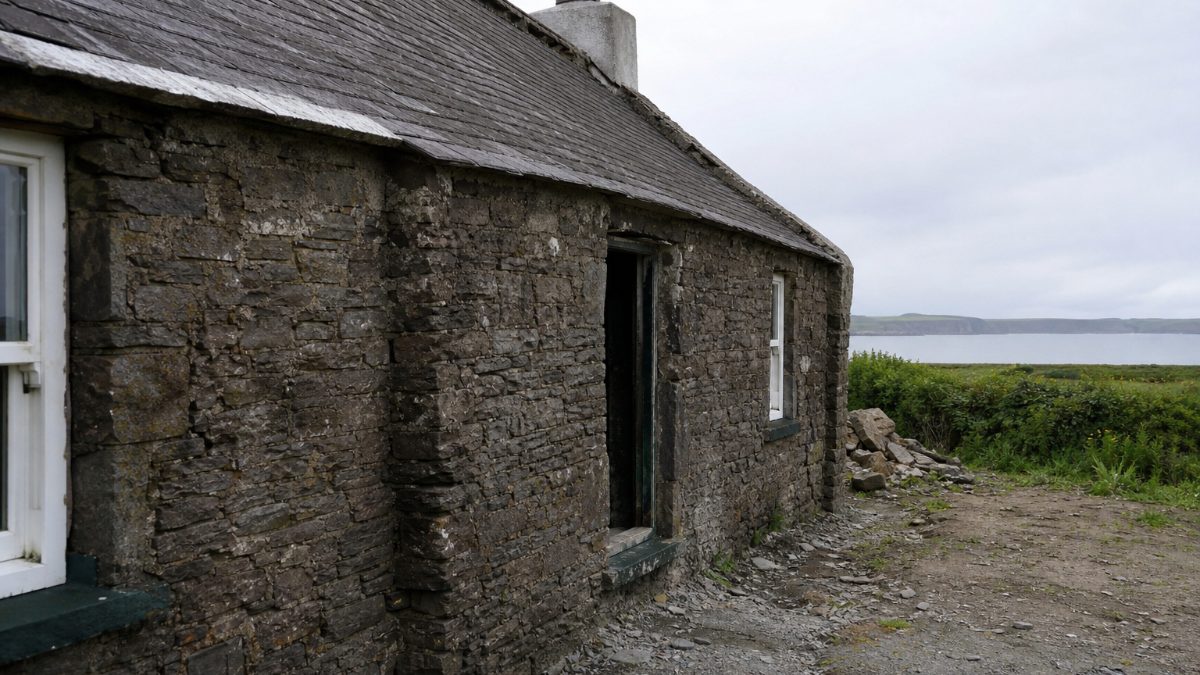
If you have an old stone cottage on the west coast, you have almost certainly had the conversation. The house is cold, the walls feel damp after a wet week, and someone has told you either to wrap the outside in insulated render or to line the inside walls and be done with it. Both approaches can work. But they work differently, they cost differently, and in a traditional building on the Atlantic fringe, picking the wrong one can cause more problems than you started with.
This is not a post about modern estates or cavity wall houses. It is specifically about the kind of solid stone or rubble wall construction that makes up a large chunk of the housing stock in rural Sligo and Mayo: walls that are half a metre thick in places, that have no cavity, that were built before anyone thought about insulation, and that have been breathing moisture in and out for a hundred years or more.
Why these walls behave differently
Old lime-mortared stone walls manage moisture by absorbing it and releasing it. They are not waterproof in the way a modern cavity wall is. They rely on that cycle of absorption and evaporation to stay stable. When you interfere with that cycle, things can go wrong quite quickly. Trapped moisture has nowhere to go. It tends to find the path of least resistance, which is often into your timber joists, your window reveals or the base of your walls.
This is the central issue with any insulation job on an old cottage. It is not just about keeping heat in. It is about where the moisture ends up.
External insulated render: what it actually involves
External wall insulation, usually called EWI, involves fixing a layer of insulation board (most commonly expanded polystyrene or mineral wool) to the outside of the wall and then applying a reinforced render system over it. The finished look is smooth and uniform, the wall thickness grows outward, and the insulation sits on the cold side of the wall.
The thermal performance can be very good. Because you are wrapping the whole structure, you largely eliminate cold bridges around lintels and window reveals. The wall itself stays warm and dry on the inside, which helps with any residual moisture in the fabric over time.
The downsides are real, though. Cost is the main one. A full EWI job on a small cottage will typically run to somewhere between fifteen and thirty thousand euro depending on size, prep work needed, and what finish you specify. That is before any grants. If you are eligible, the SEAI scheme can knock a substantial amount off that figure, and it is worth reading up on getting a home energy upgrade grant in County Sligo before you get any quotes, because the paperwork and sequencing matter.
Planning is the other complication. External render changes the appearance of the building. If you are in an Architectural Conservation Area, or if your cottage is a protected structure, you will almost certainly need to talk to Sligo County Council before you start. Even outside those designations, the standard EWI render systems are designed for modern buildings and can look completely wrong on a vernacular cottage. Getting a finish that respects the original character takes more care and usually more money.
There is also the breathability question. Many EWI systems use polystyrene board and polymer render, which are essentially vapour-impermeable. On a traditional stone wall, that can trap moisture inside the fabric rather than letting it move outward. Mineral wool board with a lime-based render is a better choice for old buildings, but fewer contractors are experienced with it and it costs more.
Internal dry lining: cheaper, quicker, but not without risk
Dry lining means fixing insulated plasterboard to the inside face of your external walls, either direct bonded or on a timber or metal frame. It is significantly cheaper than EWI, easier to do in phases, and does not affect the external appearance of the building at all, which removes most of the planning headaches.
The thermal improvement is real but more limited. Because the insulation is on the warm side of the wall, the wall itself stays cold. Condensation can form at the back of the board if vapour gets through, particularly at junctions with floors and ceilings where the insulation cannot be continued cleanly. Getting those junctions right is the difference between dry lining that works and dry lining that creates a mould problem behind your walls three years later.
You also lose floor area. Even fifty millimetres of insulation board on every external wall shrinks your rooms noticeably in a small cottage. In a bedroom that was already tight, that matters.
Breathable insulation materials like wood fibre board with a lime plaster finish are increasingly used for internal lining on old buildings. They manage moisture more gently than foil-backed plasterboard. They cost more and take more skill to install, but on a stone cottage they are worth serious consideration.
So which makes more sense here?
Honestly, it depends on the building and your budget. If the cottage has had cement render applied at some point in the past and is already struggling with trapped moisture, adding more impermeable material in any direction makes things worse. The first job there is sorting out the wall itself, which might involve repointing with the right lime mortar before anything else.
If you have planning freedom, a generous budget and a building that has never been cemented, external insulation with a breathable system gives better overall performance. If you are working room by room, on a tighter budget, and the building is relatively dry, internal dry lining with the right materials and careful detailing at junctions is a reasonable choice.
Either way, get a builder who has worked on old stone buildings before, not just modern houses. It genuinely makes a difference.