Wild Swimming at Enniscrone: Sensible Answers to the Questions People Actually Ask
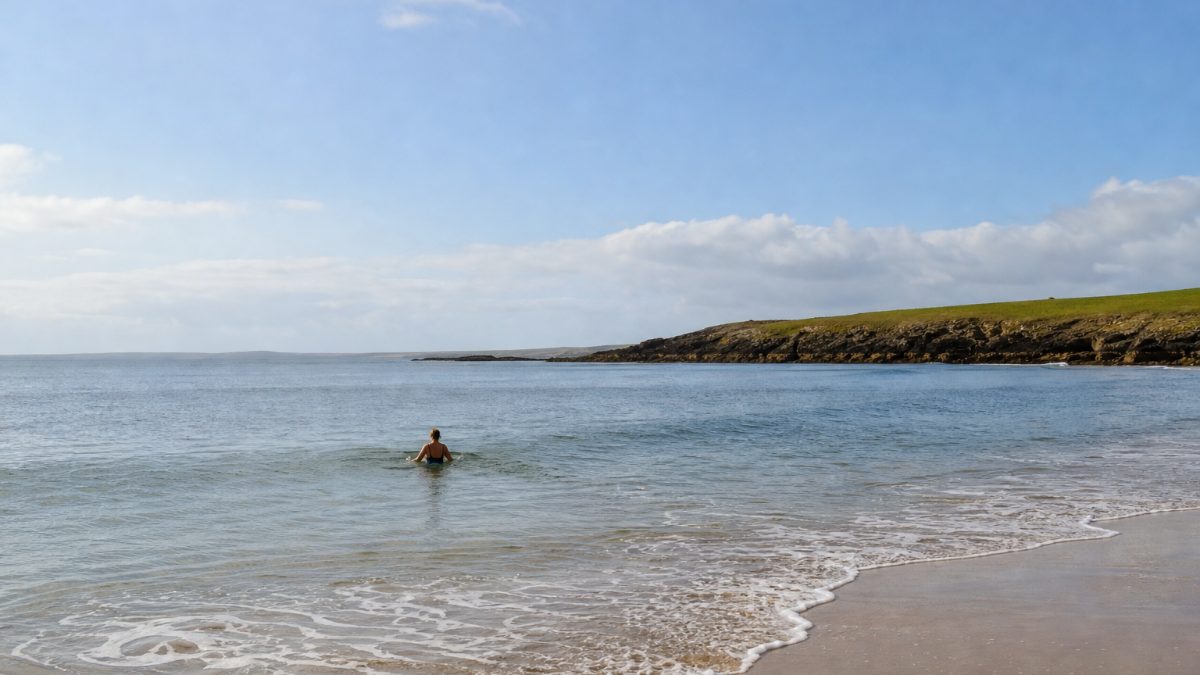
People ask a lot of sensible questions before getting into the sea at Enniscrone for the first time, especially in autumn or winter. The beach is a genuinely good place to swim. It's wide, the entry is gradual, and there's usually someone else already in the water who knows what they're doing. But the Atlantic is the Atlantic, and it pays to have straight answers before you wade in.
Is the water actually safe to swim in year-round?
Generally yes, but conditions matter more than the calendar. The water quality along this stretch of coast is typically good, and plenty of locals swim right through winter without any drama. What changes with the seasons isn't so much the safety of the water itself as the conditions around it: swell height, wind direction, rip currents, and how quickly the cold affects your body. A calm January morning can be a nicer swim than a rough August afternoon.
How cold does it actually get?
The sea off Sligo doesn't drop as sharply as people expect. Atlantic water has a kind of thermal lag, so it's often warmer in October than the air temperature suggests, and colder in June than summer should allow. In deep winter you're probably looking at somewhere around 7 or 8 degrees, which is cold enough to cause cold water shock if you're not prepared. By July or August it might reach 15 or 16 degrees on a good year. Neither extreme is extreme by global standards, but neither is forgiving if you ignore them.
What is cold water shock and should I worry about it?
It's worth knowing about. When you enter cold water quickly, your body can react with an involuntary gasp and hyperventilation. If your face is underwater at that moment, it's dangerous. The fix is simple: enter slowly, don't jump or dive in, give yourself a few seconds to adjust. Keep your head above water until your breathing settles. Most experienced cold-water swimmers will tell you the first thirty seconds are the hardest part.
Do I need a wetsuit?
Not strictly, but it depends on you, your tolerance, and how long you plan to be in the water. Plenty of people swim year-round in just a swimsuit and find the cold manageable with practice. A wetsuit extends the time you can stay in comfortably, which some people love and others find defeats the purpose. If you're just starting out in colder months, even a 3mm suit makes a real difference. Neoprene gloves and boots help more than most beginners expect.
How do I know if it's safe on a given day?
Check the forecast before you go. Met Éireann gives both weather and marine forecasts, and the marine section will tell you wave height and wind speed for the Atlantic coast. As a rough guide, anything over 1.5 metres of swell warrants real caution at an open beach like Enniscrone, and onshore winds can make even moderate swell unpredictable. If in doubt, stand on the beach and watch the water for a few minutes before getting in.
Are there rip currents at Enniscrone?
Yes, they can occur, as at any long sandy beach. Rips tend to form in channels between sandbanks, often running away from the shore in a narrow strip. The key signs are a patch of darker, choppier water moving in a different direction to the waves around it, sometimes with a bit of foam or discoloured water on the surface. If you get caught in one, don't exhaust yourself swimming directly back to shore against it. Swim parallel to the beach until you're out of the current, then come in. The beach does have lifeguard cover during the summer season, but outside those months you're responsible for your own judgement.
What should I bring?
A dry robe or big towel for getting changed in the wind, a flask of something warm, and shoes you don't mind getting wet on the approach. The beach surface itself is fine but the dunes and paths can be soft and damp, particularly in winter. If you haven't walked out that way before, walking the dunes at Enniscrone beach on a January morning gives you a decent sense of what to expect underfoot at that end of the year.
Some people also pair a swim with a visit to the seaweed baths nearby, which is worth considering if the idea of what seaweed bathing actually does for you has ever crossed your mind. It makes for a good combination on a cold day, and the warmth afterwards is very welcome.